
The concept involves integrating software, devices, and networked systems into clinical and administrative routines so that patient information, clinician communication, and care processes can be supported by digital tools. Examples include electronic medical record systems that store clinical notes, telehealth platforms that allow remote consultations, medical devices that transmit physiologic data, and analytics platforms that summarize population-level trends. In the United States these components often interact across hospitals, clinics, specialty practices, and home settings to create information flows that can support decision-making and coordination.
These digital components typically address tasks such as information retrieval, appointment management, remote observation, and care-team messaging. Implementation commonly requires attention to interoperability standards, privacy rules, vendor integrations, and clinician workflows. Adoption patterns can vary across hospital systems and ambulatory practices in the United States depending on organizational size, available budgets, and regulatory incentives. The following examples illustrate representative types of tools that are widely referenced in U.S. clinical settings.
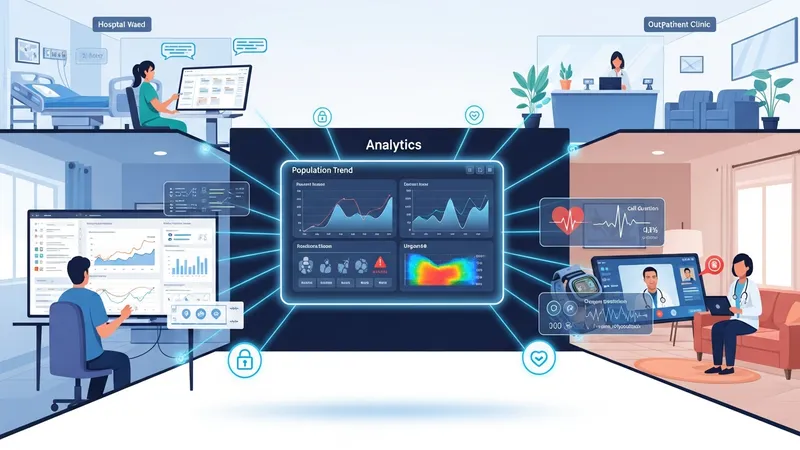
Electronic health records may often serve as a central repository for clinical data and can facilitate transitions of care when systems exchange records. In the United States, many hospitals implemented certified EHR technology following federal incentive programs and regulatory timelines, and EHRs typically include modules for notes, orders, and basic decision support. However, integration across multiple vendors and care settings may often require middleware, interfaces, or HIE participation to move structured data reliably between organizations.
Telehealth platforms have been used to deliver remote clinician visits and may change scheduling patterns and geographic access to specialists. Reimbursement policies set by Medicare, Medicaid, and private payers in the United States can influence how telehealth is used in practice; during public health emergencies some flexibilities expanded usage, and these policy changes have often been discussed in professional and regulatory forums. Clinicians and organizations may evaluate telehealth for suitability based on clinical needs, technology readiness, and patient preference.
Remote monitoring devices may provide continuous or intermittent physiologic measures that can be reviewed by clinicians or integrated into clinical platforms. In U.S. practice, some devices interface with EHRs or vendor portals to present data trends, while others require separate review workflows. Data quality, device calibration, patient training, and the volume of incoming data are common considerations that organizations weigh when establishing monitoring programs.
Health data tools and analytics can summarize utilization patterns, identify population-level trends, and support reporting obligations. In United States settings, analytics may be used for quality measurement, resource planning, and population health management while respecting privacy regulations. Effective use of analytics typically requires defined data governance, standard data definitions, and validation steps to ensure outputs are interpreted appropriately.
In summary, integrating digital systems into clinical environments involves technical, regulatory, and workflow components that may change how information is collected, shared, and acted upon. The next sections examine practical components and considerations in more detail.
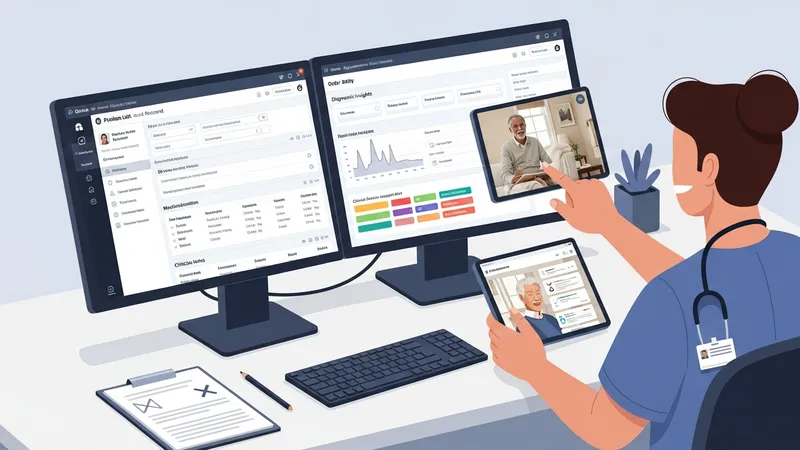
Electronic health record (EHR) systems are a primary digital tool in many U.S. hospitals and clinics. They commonly include structured fields for diagnoses, medication lists, laboratory results, and clinician notes. According to federal reporting in the late 2010s, certified EHR adoption among U.S. hospitals exceeded 90% in many measures, reflecting widespread uptake influenced by policy incentives. EHRs often offer modules for order entry, results viewing, and basic clinical decision support; organizations frequently tailor these modules to local workflows and specialty needs.
Telehealth platforms enable synchronous and asynchronous clinician–patient interactions using secure audio/video or messaging channels. In the United States, Medicare and many private payers have defined reimbursement policies that can affect telehealth use for primary care and specialty consultations. Telehealth implementations typically include features such as appointment scheduling integration, documentation templates, and secure transmission. Clinician training and patient access to internet-capable devices are practical considerations for sustaining telehealth services.
Remote monitoring devices comprise a range of consumer and medical-grade tools that collect physiologic or behavioral data outside traditional care sites. Examples in U.S. practice include continuous glucose monitors, ambulatory cardiac monitors, and home spirometry devices. Integration pathways vary: some devices provide APIs or vendor portals that can feed into care-team workflows, while others require separate review processes. Programs that monitor remote-device data often develop thresholds and escalation protocols to manage incoming alerts and clinician workload.
Clinical software and analytics tools support tasks such as medication reconciliation, risk stratification, and performance measurement. These tools may use standards like HL7 FHIR to exchange data with EHRs and may generate dashboards for population health teams. In the United States, health systems often combine vendor analytics with internal reporting to meet quality reporting and operational planning requirements. Considerations include data provenance, update cadence, and how analytics outputs are acted on within care pathways.
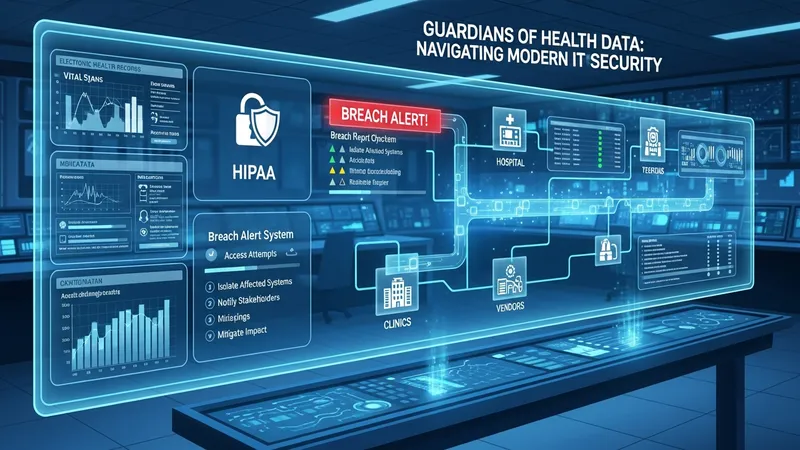
Health Insurance Portability and Accountability Act (HIPAA) privacy and security rules set expectations for covered entities and business associates that handle protected health information in the United States. Organizations typically implement administrative, physical, and technical safeguards such as access controls, encryption where appropriate, and breach reporting processes. The HITECH Act and subsequent guidance have influenced breach notification requirements and meaningful use incentives historically tied to EHR adoption.
Interoperability and information blocking rules in the United States have been shaped by the 21st Century Cures Act and related ONC regulations, which encourage standardized data exchange and restrict practices that unreasonably limit information flow. Standards such as FHIR and common terminologies like SNOMED CT or LOINC are often used to promote consistent data exchange. Organizations implementing digital tools commonly assess whether vendor interfaces support these standards and how data sharing aligns with patient consent and state laws.
The Food and Drug Administration (FDA) provides oversight for certain software as a medical device and for medical devices that include digital components. In U.S. settings, developers and health systems may evaluate whether a digital tool meets device definitions and what regulatory pathway is appropriate. Separately, data residency, state privacy laws, and sector-specific constraints (for example, substance use disorder records) can introduce additional requirements for how data are stored and shared.
Security incident response and audit practices are practical considerations for U.S. organizations using digital tools. Regular risk assessments, vendor due diligence, and penetration testing are commonly used to identify vulnerabilities. When breaches occur, federal and state reporting rules may apply. These regulatory and privacy frameworks inform procurement decisions, contractual terms with vendors, and internal governance of digital health implementations.
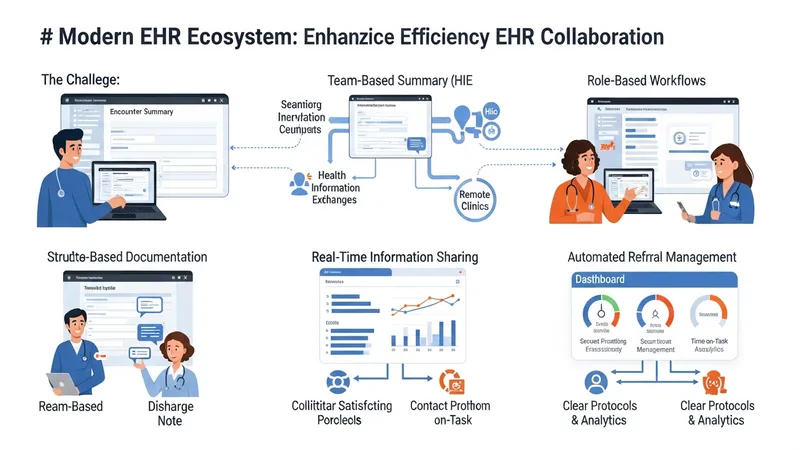
Digital systems frequently change documentation workflows for clinicians and staff. EHR templates and structured data entry can streamline certain administrative tasks but may also alter how clinicians allocate time during visits. Some U.S. health systems have invested in role-based workflows, such as medical scribes or team-based documentation models, to address documentation time. Organizations often monitor clinician satisfaction and time metrics when introducing new tools to understand operational impacts.
Care coordination can be supported through shared patient records, secure messaging, and referral management features. In the United States, health information exchanges (HIEs) and EHR-based messaging are often used to transmit encounter summaries, imaging reports, and discharge information across settings. Effective coordination practices commonly involve agreed data formats, contact protocols, and escalation pathways so that information reaching downstream clinicians is actionable and timely.
Billing and reimbursement workflows can be affected by telehealth and remote monitoring adoption. U.S. payers, including Medicare and many private insurers, have defined service codes, billing modifiers, and documentation expectations for remote services; these rules can influence which services are financially sustainable to provide. Health systems typically align their coding and billing processes with current payer rules and may track utilization trends to inform operational planning.
Workforce training and change management are central to operational success. Implementations in U.S. settings frequently include phased rollouts, clinician champions, and ongoing training resources to support adoption. Evaluation often tracks metrics such as appointment throughput, documentation timeliness, and patient access measures to determine whether workflow adjustments are achieving intended operational goals.
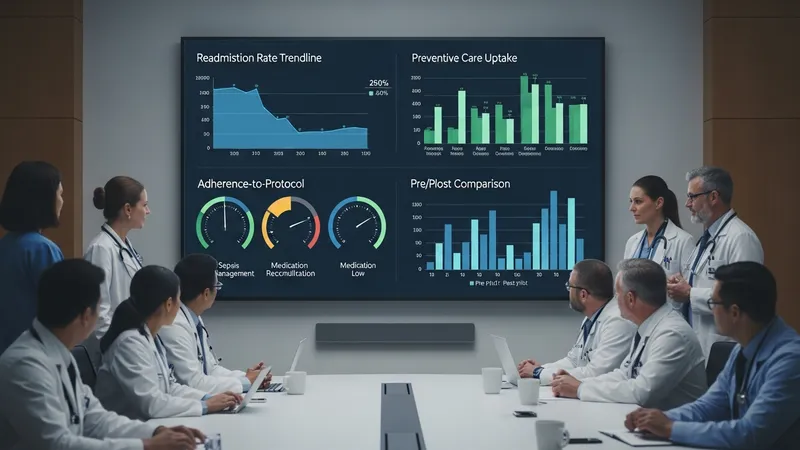
Measurement frameworks for digital tools commonly include usability, safety, clinical process metrics, and access indicators. In the United States, quality measures used by CMS and other stakeholders may intersect with digital program evaluation: for example, metrics related to readmissions, preventive care uptake, or adherence to evidence-based protocols. Organizations often pilot interventions and collect pre/post data to understand impacts on workflow and outcomes while avoiding causal assertions without rigorous study designs.
Interoperability standards such as FHIR and policy efforts to reduce information blocking are likely to influence how new tools connect across the U.S. health ecosystem. Greater standardization may enable more seamless data exchange among EHRs, telehealth platforms, and device vendors, yet practical integration still commonly requires local configuration, testing, and governance. Data harmonization and mapping are ongoing tasks for many health systems that plan to use combined datasets for analytics or care management.
Equity and access considerations are relevant when deploying digital services at scale in the United States. Differences in internet access, device ownership, language needs, and digital literacy can affect which patients can use telehealth or remote monitoring. Health systems often review demographic patterns and access metrics to identify underserved populations and to design alternative care pathways or support services that reduce unintentional disparities.
Looking ahead, U.S. organizations evaluating digital care tools often prioritize clear governance, measurable objectives, and iterative improvement processes. Investment decisions commonly consider total cost of ownership, vendor support models, and alignment with regulatory requirements. Continued monitoring, stakeholder engagement, and transparent reporting of implementation experience may help organizations adapt tools to clinical needs while observing applicable U.S. laws and standards.