
Small business finance refers to the set of principles and practices that guide how a small enterprise manages funds, plans for future needs, and evaluates financial performance. It covers how cash moves into and out of the business, how owners and managers set budgets, how short- and long-term financing is structured, and how financial records feed decision-making. The aim is to align daily operations, periodic planning, and investment choices with the available resources so the enterprise can operate sustainably and respond to fluctuations.
At its core, this subject emphasizes measurable processes: forecasting receipts and disbursements, establishing spending limits, monitoring expenses against targets, and assessing profitability by product line or service. It typically involves routine bookkeeping, periodic analysis of key metrics such as gross margin and operating margin, and scenario planning for slower or faster revenue periods. Entrepreneurs often use these routines to inform pricing, staffing, inventory, and capital procurement choices.

Cash flow forecasting often serves as the immediate operational control tool for small enterprises. A practical projection may break the coming 12 weeks into weekly entries to capture payroll, vendor payments, and expected receipts. This short-horizon view can indicate moments when additional liquidity could be required or when excess cash is available to defer borrowing. Forecasts typically rely on recent sales patterns, known contractual dates, and conservative assumptions about timing to reduce surprise. They may be updated frequently as actual receipts and payments occur.
Budgeting and variance analysis form a complementary planning layer that addresses expected performance across a fiscal year or multi-year horizon. Budgets commonly allocate revenue by product or service category and match those allocations against direct costs and overhead. Variance analysis then isolates differences between budgeted and actual results to reveal trends such as rising input costs or shifting customer demand. These insights may guide adjustments to staffing levels, pricing strategies, or vendor negotiations while remaining descriptive rather than prescriptive.
Evaluating funding sources and capital structure requires weighing trade-offs between cost, duration, and operational flexibility. Short-term credit facilities can provide working capital to bridge timing gaps, while term financing may fund equipment or facility investments. Owner-provided capital and outside equity change the claim structure on future earnings. Entrepreneurs often consider typical borrowing costs, collateral requirements, and expected repayment schedules as part of a balanced approach that seeks to avoid undue leverage while maintaining capacity to invest in operations.
Accurate expense tracking and basic profitability analysis are foundational for operational decision-making. Categorizing expenses into variable and fixed components allows calculation of contribution margin and break-even points for offerings. Many small enterprises use simple spreadsheets or entry-level accounting systems to generate timely reports on gross profit, operating profit, and cash positions. These regular reports can surface product lines with thin margins or expenses that may be controllable, supporting informed operational choices rather than reactive responses.
In summary, small business finance integrates forecasting, budgeting, funding assessment, and expense tracking to support ongoing decisions and planning. These elements typically function together: forecasts inform short-term liquidity choices, budgets frame longer-term objectives, funding assessments shape capital availability, and expense analysis measures performance. The next sections examine practical components and considerations in more detail.
Cash flow and liquidity management focus on ensuring the business has sufficient cash at the right times to meet obligations. Liquidity planning often uses rolling forecasts covering weeks to quarters, projecting receipts such as customer payments and expected disbursements like payroll and supplier invoices. Entrepreneurs may monitor ratios such as operating cash flow to current liabilities as a simple liquidity check. Considerations include collection terms, inventory turnover, and timing of recurring payments; each factor can affect short-term cash positions and influence choices about short-term financing or payment scheduling.

Techniques to manage liquidity can include negotiating payment terms with suppliers, offering staged invoicing to customers, and maintaining a contingency buffer in an operating account. Firms may also stagger major outlays to match expected receipts. While these techniques can reduce liquidity strain, they may carry trade-offs such as supplier relations or administrative complexity. Businesses typically weigh these trade-offs against the cost of external financing, aiming to maintain sufficient runway without excessive financing costs.
Monitoring actual cash flow versus forecast is important to detect variances promptly. Regular review cycles—weekly for operational cash and monthly for broader patterns—help identify seasonality, payment delays, or unexpected expenses. When forecasts show shortfalls, common measures include delaying discretionary spending, accelerating receivables collection, or exploring temporary credit. These responses are practical considerations rather than guarantees of success and should be assessed for their likely operational impact.
Liquidity planning also ties into capital allocation decisions. If forecasts indicate consistent surplus cash, a business may consider reducing short-term borrowing or allocating funds to maintenance and efficiency projects. Conversely, persistent shortfalls may signal the need to revisit pricing, cost structure, or the appropriateness of current staffing and inventory levels. These assessments typically form part of periodic financial reviews to align short-run liquidity with strategic priorities.
Budgeting and financial planning provide the structured framework for expected income and spending over a period, commonly one fiscal year. Budgets often begin with revenue projections by product or service line, then allocate costs to produce an operating plan. Rolling forecasts may supplement annual budgets to incorporate recent performance and changing assumptions. Financial planning can include scenarios—such as conservative, base, and optimistic—to illustrate potential variance ranges and support contingency planning without implying certainty about outcomes.
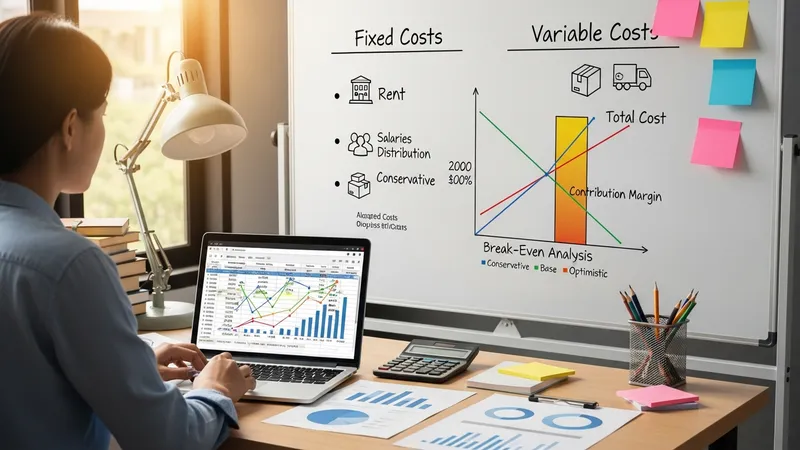
Budget construction typically separates fixed and variable costs to highlight how changes in volume affect profitability. Fixed costs such as rent and certain salaries remain stable across typical demand ranges, while variable costs move with production or sales. This separation allows calculation of contribution margins and break-even levels that inform pricing and capacity decisions. Using historical data to inform assumptions may improve realism, though entrepreneurs commonly treat forecasts as indicative rather than definitive.
Variance analysis compares actual results against the budget to identify significant deviations. Categories for review may include revenue shortfalls, rising input costs, or unexpected overhead increases. When variances are material, management can investigate root causes and consider measured adjustments such as reallocating budgeted marketing spend or revising sales forecasts. The process is analytical: it seeks explanations and context rather than immediate corrective directives.
Financial planning often extends to multi-year projections when considering investments or growth initiatives. Multi-year models typically incorporate assumptions about revenue growth rates, margin changes, and capital expenditures, and they can help evaluate whether particular investments may be sustainable under plausible scenarios. These models may be revised periodically as actual performance provides new information, maintaining alignment between planning and operational realities.
Funding considerations address how a small business secures financial resources for operations and investment. Common sources include owner capital, bank loans, lines of credit, equipment financing, and, in some cases, investors. Each type of funding tends to have distinct characteristics such as duration, cost, collateral requirements, and repayment structure. Evaluating options typically involves assessing the likely cost of capital, expected cash generation, and the operational flexibility each source affords.
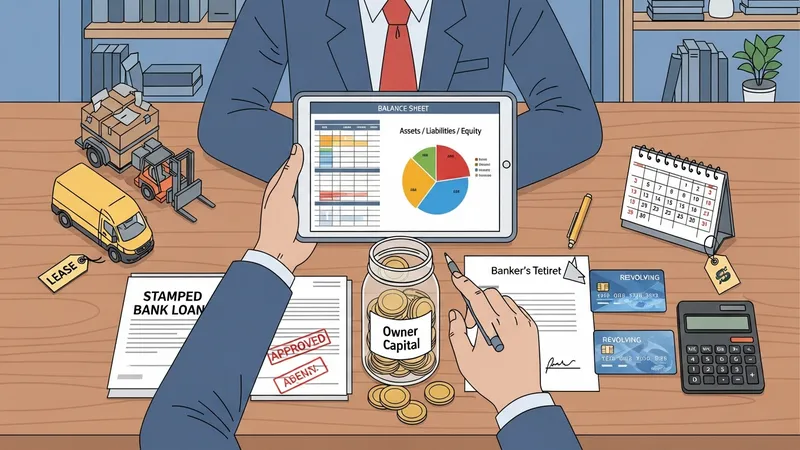
Short-term facilities such as revolving credit lines often support working capital needs and seasonal fluctuations, while term loans and equipment leases may fund longer-lived assets. Owner equity alters the balance sheet by reducing leverage but may dilute control if external equity is used. Entrepreneurs may use a combination of sources to balance liquidity needs and long-term obligations. The choice of funding can affect cash flow commitments and the capacity to respond to unforeseen changes in revenue or expense patterns.
Lenders and investors commonly examine financial statements, cash flow projections, and collateral when evaluating an application for funding. Preparation typically includes clear documentation of recent performance and realistic forecasts. Cost considerations may involve interest rates, origination fees, and covenants that could restrict certain activities. These trade-offs are practical considerations rather than prescriptive rules and should be reviewed against the business’s tolerance for payment obligations and administrative requirements.
Capital structure decisions may also be influenced by tax and accounting implications, which vary by jurisdiction and entity type. For example, interest expense on debt may be treated differently than dividend distributions. Businesses often consult qualified advisors when assessing complex implications. Ultimately, maintaining a funding mix consistent with cash flow profiles and strategic objectives tends to be a prudent consideration for long-term stability.
Expense tracking and profitability analysis inform whether products or services contribute positively to overall results. Tracking typically categorizes expenses by function (cost of goods sold, selling, general and administrative) and by product or customer where feasible. Contribution margin analysis isolates the incremental profit each sale generates after variable costs, which can clarify which offerings may cover fixed costs more effectively. These metrics provide factual inputs for decisions such as product line adjustments or pricing reviews.

Common decision metrics include gross margin, operating margin, break-even point, and days sales outstanding for receivables. These measures may be tracked monthly or quarterly to identify trends. For instance, a falling gross margin can indicate rising input costs or pricing pressure, prompting a review of supplier terms or cost structure. Similarly, increasing days sales outstanding may suggest tightening of credit controls or collection processes. These indicators are diagnostic tools rather than prescriptive mandates.
Many small firms implement basic accounting systems or spreadsheets to automate recording and reporting. Timely, accurate data supports reliable analysis; without it, metrics can mislead. Regular reconciliation of accounts and consistent categorization of transactions reduce errors and improve the quality of insights. Businesses may periodically audit reporting practices to ensure that cost allocations and revenue recognition follow consistent and transparent rules.
Using these financial insights to inform decisions typically involves weighing short-term effects against longer-term objectives. For example, a temporary price concession may improve volume but could erode margins over time. Expense control actions can improve profitability but may also affect capacity or customer service. Entrepreneurs often balance these considerations, using financial metrics as one input among operational and strategic factors when deciding on changes to the business model or offerings.