
The field covered here focuses on a commercial provider’s molecular-diagnostics offerings and how those tools are used in clinical and laboratory settings in the United States. In plain terms, this encompasses instruments, chemical reagents, software, and validated assay protocols designed to detect, quantify, or sequence nucleic acids from patient or research specimens. These systems are integrated into clinical workflows that move samples from collection to result reporting, and they interface with laboratory information systems, quality assurance procedures, and regulatory frameworks commonly found in U.S. clinical laboratories.
Technologies in this area typically include real-time polymerase chain reaction (PCR), next-generation sequencing (NGS), targeted genotyping assays, and automation for sample preparation. Each technology category may be applied to different clinical use cases such as infectious disease detection, oncology panels, hereditary disease testing, or pharmacogenomic screening. Within U.S. practice, laboratories that adopt these products often consider factors such as throughput, turnaround time, reagent supply chains, staff training, and compliance with CLIA and other oversight.
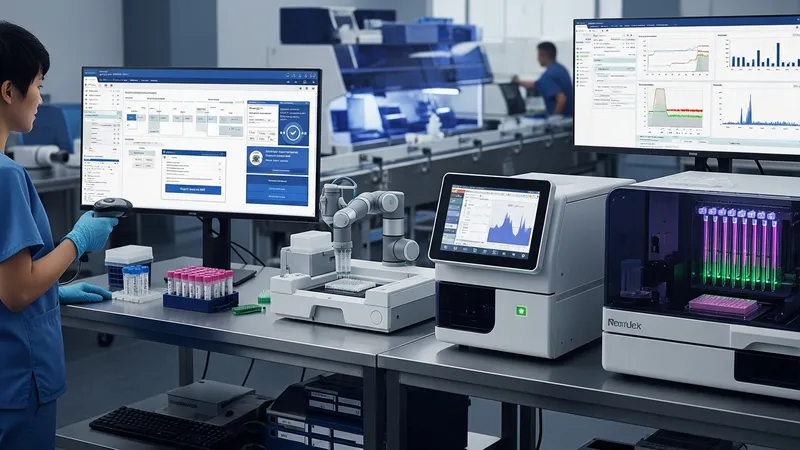
Assay selection commonly reflects the intended clinical question, sample type, and laboratory capacity. For example, real-time PCR assays may be selected for rapid pathogen detection because they typically offer faster turnaround and lower per-sample cost for single-target tests, while NGS panels may be chosen for comprehensive mutation profiling in oncology where multiple loci are interrogated simultaneously. In U.S. clinical settings laboratories often weigh hands-on time, automation compatibility, and reporting complexity when deciding which platform to adopt. Supplier-provided validation data and local verification studies typically inform those decisions.
Workflow integration often requires attention to pre-analytical variables that can affect nucleic acid quality. Common sample types in U.S. clinical practice include nasopharyngeal swabs, blood (whole blood, plasma), formalin-fixed paraffin-embedded tissue, and saliva. Each sample type can introduce specific extraction and handling needs; for instance, FFPE tissues typically need deparaffinization and may yield fragmented nucleic acid, which can influence assay design and library preparation steps for sequencing. Labs typically document pre-analytical procedures in standard operating procedures to maintain traceability.
Quality control and proficiency testing are routine considerations and often involve running external controls, participation in College of American Pathologists (CAP) programs, and adherence to CLIA requirements administered by the Centers for Medicare & Medicaid Services (CMS). These oversight mechanisms in the United States may require method verification, ongoing performance monitoring, and documentation of corrective actions. Manufacturers often supply calibrators and control materials, but clinical laboratories commonly perform independent verification studies before placing assays into clinical use.
Data handling and bioinformatics are significant in applications that generate sequence data. NGS produces raw reads that require alignment, variant calling, and annotation; clinical labs in the United States typically implement validated pipelines and maintain audit trails to support clinical reporting. For targeted PCR assays, laboratory software frequently integrates with laboratory information systems to import sample identifiers and export interpreted results. Data security, retention policies, and compliance with Health Insurance Portability and Accountability Act (HIPAA) standards are typical operational considerations for U.S. clinical laboratories.
Overall, this introductory overview summarizes the technological categories, typical use cases, and laboratory considerations relevant to the subject. The next sections examine practical components and considerations in more detail.
Instrument categories and assay chemistries introduced earlier may be grouped by intended use and throughput. Real-time PCR instruments are often used for targeted detection and quantitation; in U.S. clinical practice they may support same-day reporting for many infectious disease assays. NGS platforms are typically applied when multiplexed variant detection or broader genomic profiling is required; U.S. clinical laboratories may choose benchtop sequencers for focused panels or larger instruments for higher throughput. Assay chemistries such as hydrolysis probes, amplicon-based NGS panels, or hybrid-capture methods each have trade-offs in sensitivity, input requirements, and hands-on time.
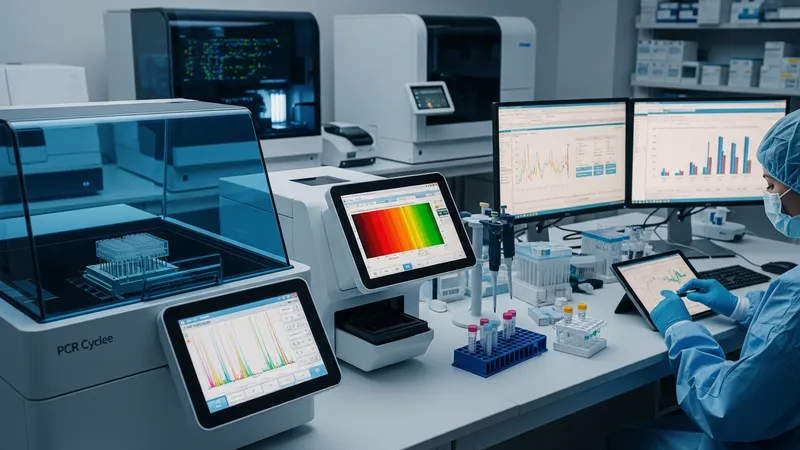
Choosing among assay types often involves considering per-sample cost drivers. For single-target PCR testing, reagent and consumable costs per sample may be relatively low, and instrument amortization can be favorable for moderate volumes. For NGS, costs per sample can decrease with higher batching and multiplexing but typically require more bioinformatics and data storage investment. U.S. laboratories often model expected test volumes, anticipated reimbursement environment, and staffing levels to estimate total cost of ownership for different platforms.
Manufacturers also supply assay kits and validated panels intended to simplify implementation; in the United States many clinical labs use these kits as part of an overall validated workflow. Even when using manufacturer-validated assays, U.S. CLIA regulations generally require laboratories to perform a verification study demonstrating performance in the local environment. Verification may include assessing limits of detection, precision, analytic specificity, and accuracy using reference materials or characterized clinical specimens.
Operational considerations include instrument maintenance, service agreements, and supply chain reliability. In the U.S., laboratories often maintain inventory levels of critical reagents and consider service contracts that include preventive maintenance and technical support. Planned instrument downtime and contingency plans for high-demand periods may factor into platform selection, especially for assays that support acute clinical decisions.
Clinical workflows typically progress from specimen receipt and accessioning through nucleic acid extraction, assay setup, detection or sequencing, and result interpretation and reporting. Automation can reduce manual steps and variability: examples include automated extraction systems, liquid-handling workstations for assay setup, and integrated sequencer sample preparation modules. In U.S. clinical laboratories, automation selection often balances throughput needs against available bench space, capital budget, and staff expertise. Middleware solutions may assist with sample tracking and routing between instruments.
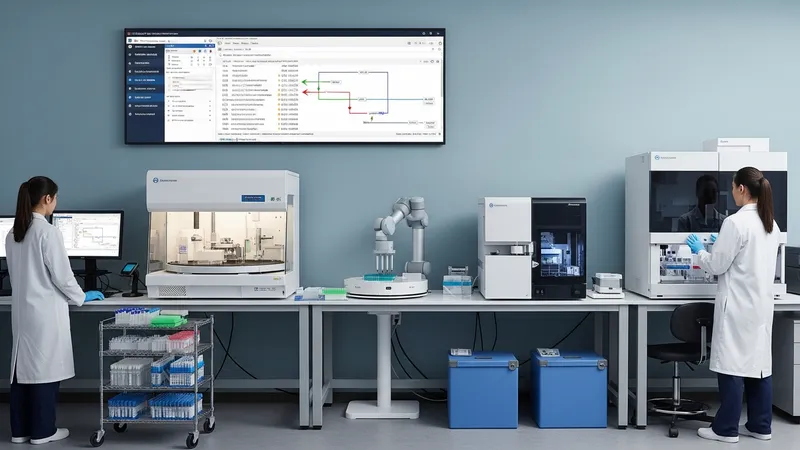
Laboratory information system (LIS) integration is a frequent requirement for clinical reporting and billing. Many instrument vendors provide drivers or interfaces that can exchange orders, sample IDs, and result data with an LIS. U.S. laboratories typically validate these interfaces to ensure accurate transmittal of patient identifiers, test codes, and interpretive comments. Data formatting standards such as HL7 messaging are commonly used in U.S. clinical informatics to support interoperability between devices and health record systems.
Turnaround time expectations vary by test type: single-target PCR assays often provide results within hours to a day, while NGS panels may take several days due to library preparation and data analysis. U.S. hospitals or reference labs often stratify assays by clinical urgency and may maintain rapid PCR workflows for urgent infectious disease testing. Sample batching strategies for sequencing can optimize cost per sample but may lengthen individual sample turnaround; laboratories commonly document expected turnaround times in test menus shared with ordering clinicians.
Staff training and competency assessment are ongoing operational items. Laboratories in the United States typically implement documented training programs and periodic competency evaluations for personnel performing molecular techniques. Cross-training staff on multiple instruments and procedures can improve resilience but requires time for validation and documentation. Staffing models often consider 24/7 coverage for critical assays versus daytime-only operations for less urgent testing.
Regulatory oversight in the United States commonly includes CLIA certification managed by CMS, voluntary accreditation such as CAP surveys, and device-level interactions with the U.S. Food and Drug Administration (FDA). Some assays or instruments may have FDA-cleared or -approved claims; others are marketed as research-use-only and require laboratories to develop and validate laboratory-developed tests (LDTs). U.S. clinical laboratories typically follow CLIA requirements for method validation or verification, and CAP checklists may be used to guide quality systems and documentation.
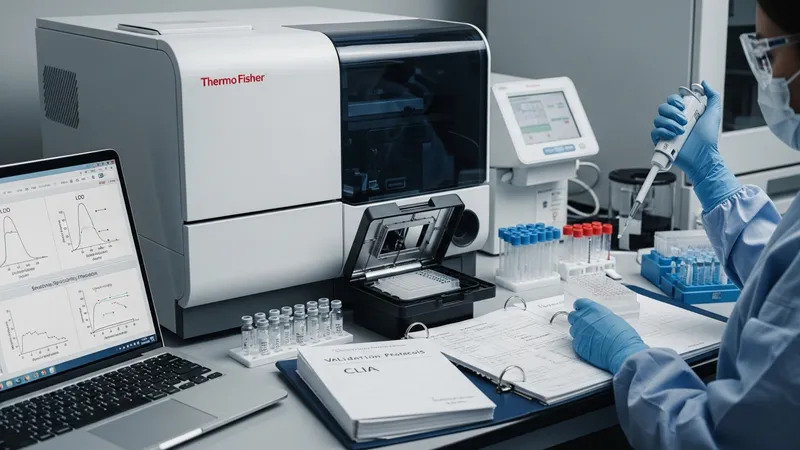
Validation studies for a chosen platform often document analytical sensitivity, specificity, precision, and reportable range. For molecular methods, limit of detection (LOD) studies are commonly performed using serial dilutions of reference material. U.S. laboratories may obtain characterized reference materials from recognized vendors or public resources and often participate in external proficiency testing to benchmark performance. Documentation of validation protocols and results is typically retained as part of the laboratory’s quality management system.
Quality control strategies usually include the use of positive and negative controls, internal amplification controls for PCR assays, and run-level metrics for sequencing such as read depth and base quality scores. Deviations from control acceptance criteria typically trigger documented investigations and corrective actions. Many U.S. laboratories maintain standard operating procedures that define action thresholds and notification pathways for out-of-range QC results.
Traceability and chain-of-custody are important, particularly where legal or public-health reporting obligations exist. Specimen labeling, electronic tracking, and audit logs support traceability from collection to result. In the U.S., laboratories reporting notifiable conditions commonly follow state and CDC reporting guidelines; design of reporting workflows often considers legal requirements, data elements to transmit, and timelines for reporting.
Data management practices vary with test complexity. For PCR-based assays, reporting may include qualitative detected/not-detected calls or quantitative cycle threshold values with appropriate interpretive comments. For NGS, reports often summarize detected variants, allele frequency, and clinical annotations drawn from curated databases. U.S. clinical laboratories typically validate bioinformatics pipelines and document versioning, reference databases, and interpretation criteria to support reproducibility and regulatory compliance.
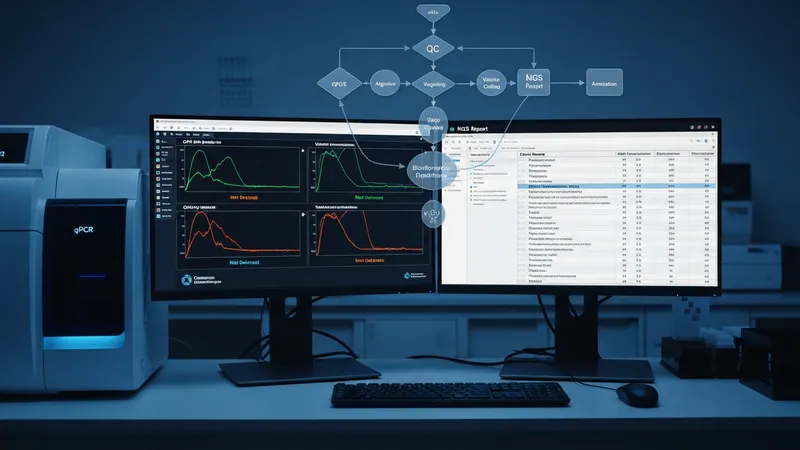
Clinical applications in U.S. practice include infectious disease testing (respiratory pathogen detection, blood-borne pathogen screening), oncology profiling (somatic mutation panels for targeted therapy selection), hereditary disease testing, and pharmacogenomic assays. Laboratories commonly align test menus with clinical needs, evidence-based guidelines, and payor coverage considerations. Reporting practices generally avoid prescriptive recommendations and instead provide interpreted findings that clinicians use alongside clinical context.
Interpreting and communicating molecular results often involves multidisciplinary collaboration. In the United States, molecular pathologists, clinical laboratory scientists, and genetic counselors frequently participate in result review, variant interpretation, and clinician communication, particularly for complex or uncertain findings. Documentation of interpretive strategies and use of standardized nomenclature such as HGVS for variants support clarity and consistency in reporting.
Data security, retention policies, and interoperability are operational priorities for U.S. laboratories. Compliance with HIPAA for patient data protection, implementation of role-based access controls, and retention schedules aligned with institutional policies are typical measures. As molecular testing continues to be integrated into clinical care, laboratories often review data governance and scalability considerations to support evolving test volumes and analytic complexity.